Current Project
Wearing the Inside Out
Threads Misbehaving
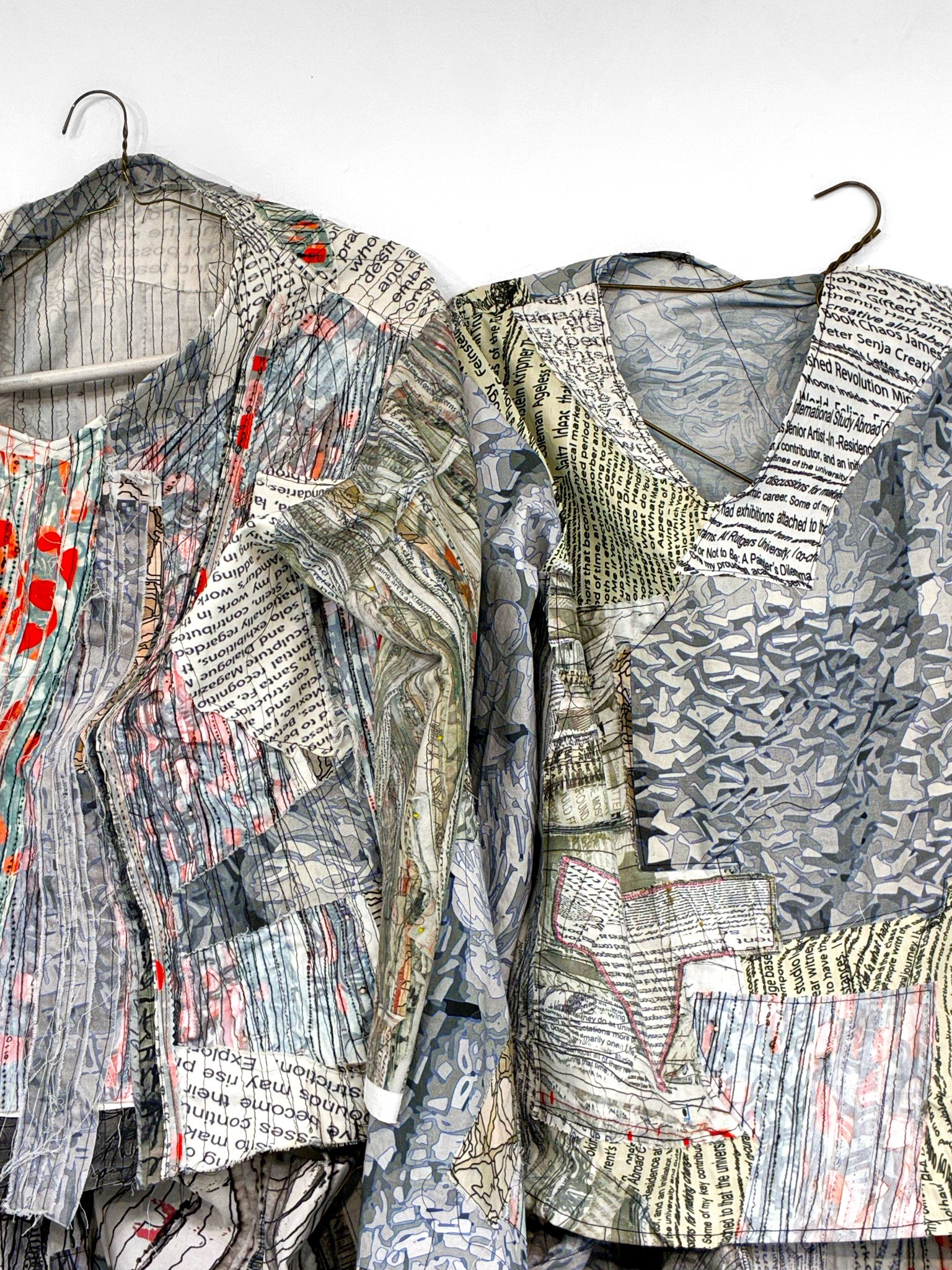
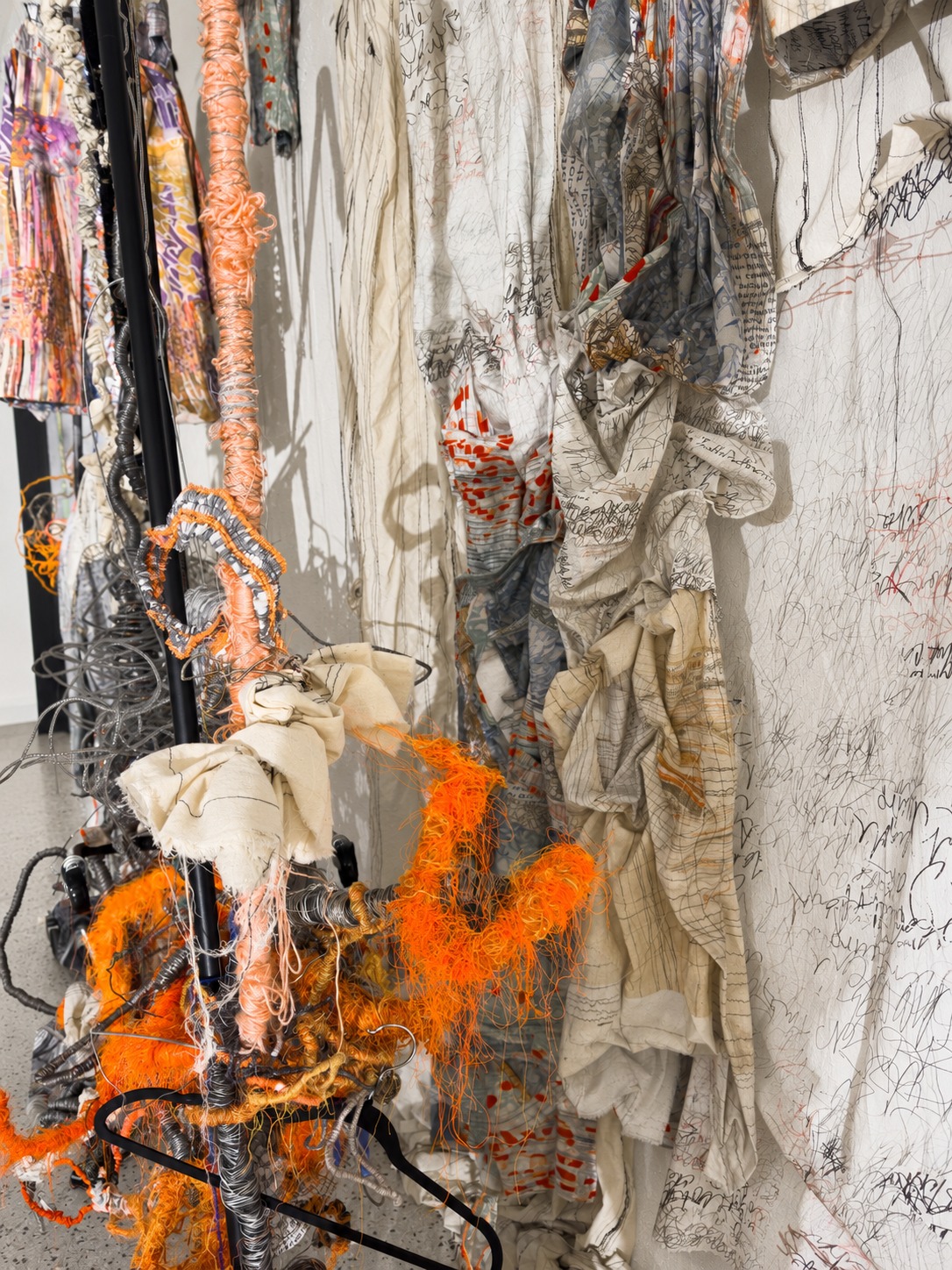
Writing becomes cloth.
Garments become a second skin.
The private becomes present.
One project. Four connected forms: installation, performance, wearables, and collaboration.
What happens when a garment associated with illness and institutional care becomes a site for individual expression?
Four Ways In
Choose an image to explore.
See the Project as a Whole
Installation
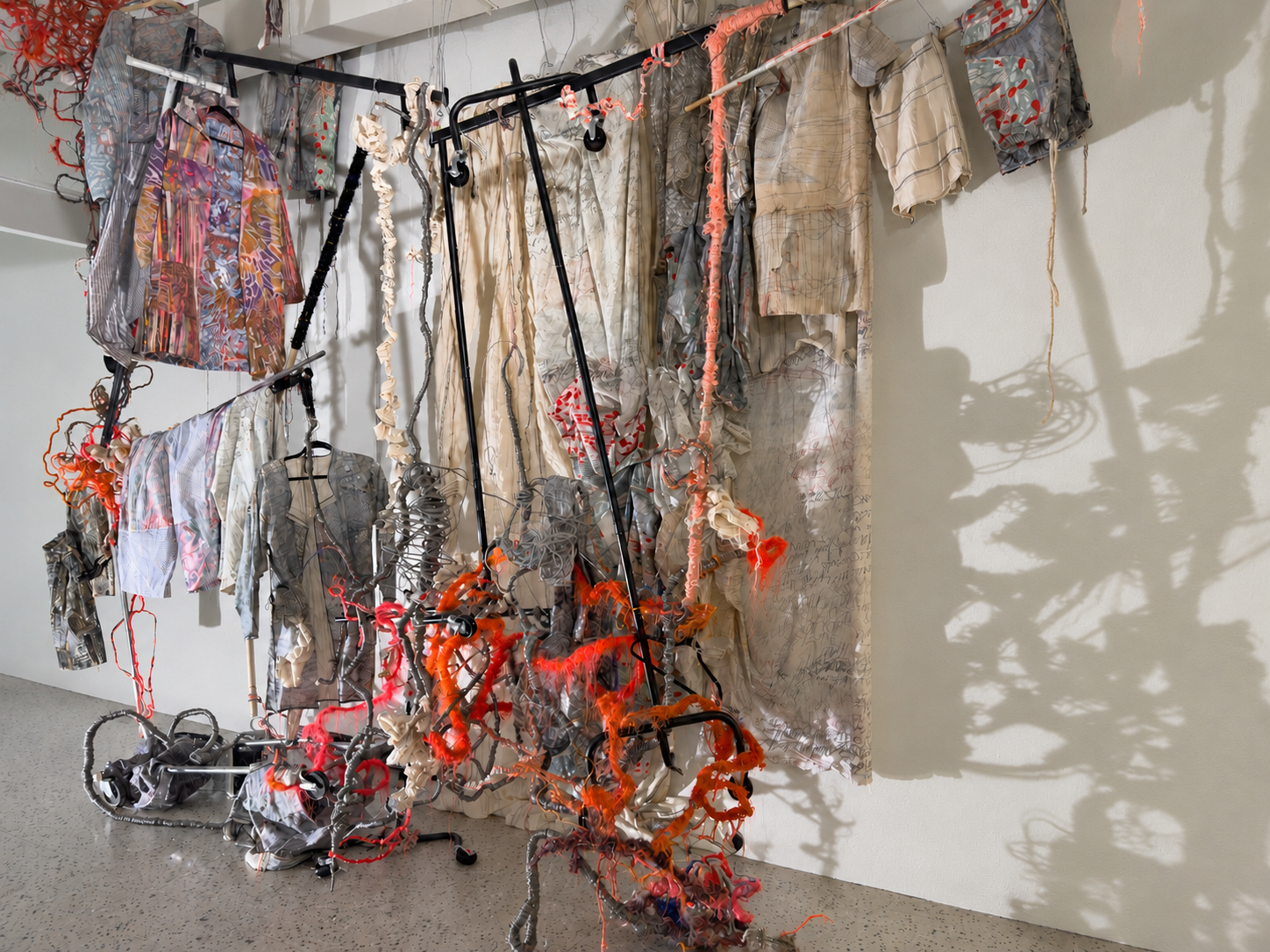
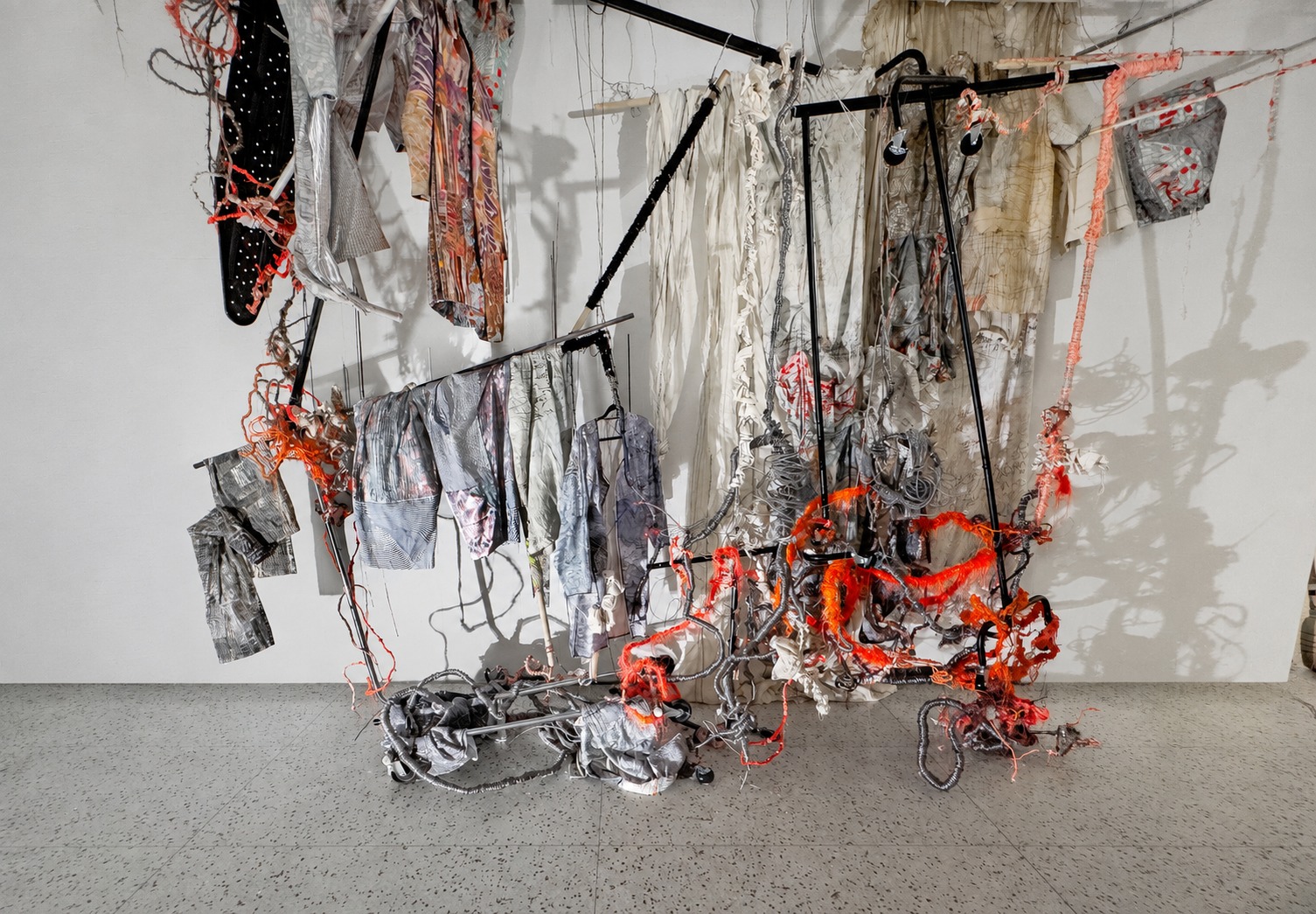
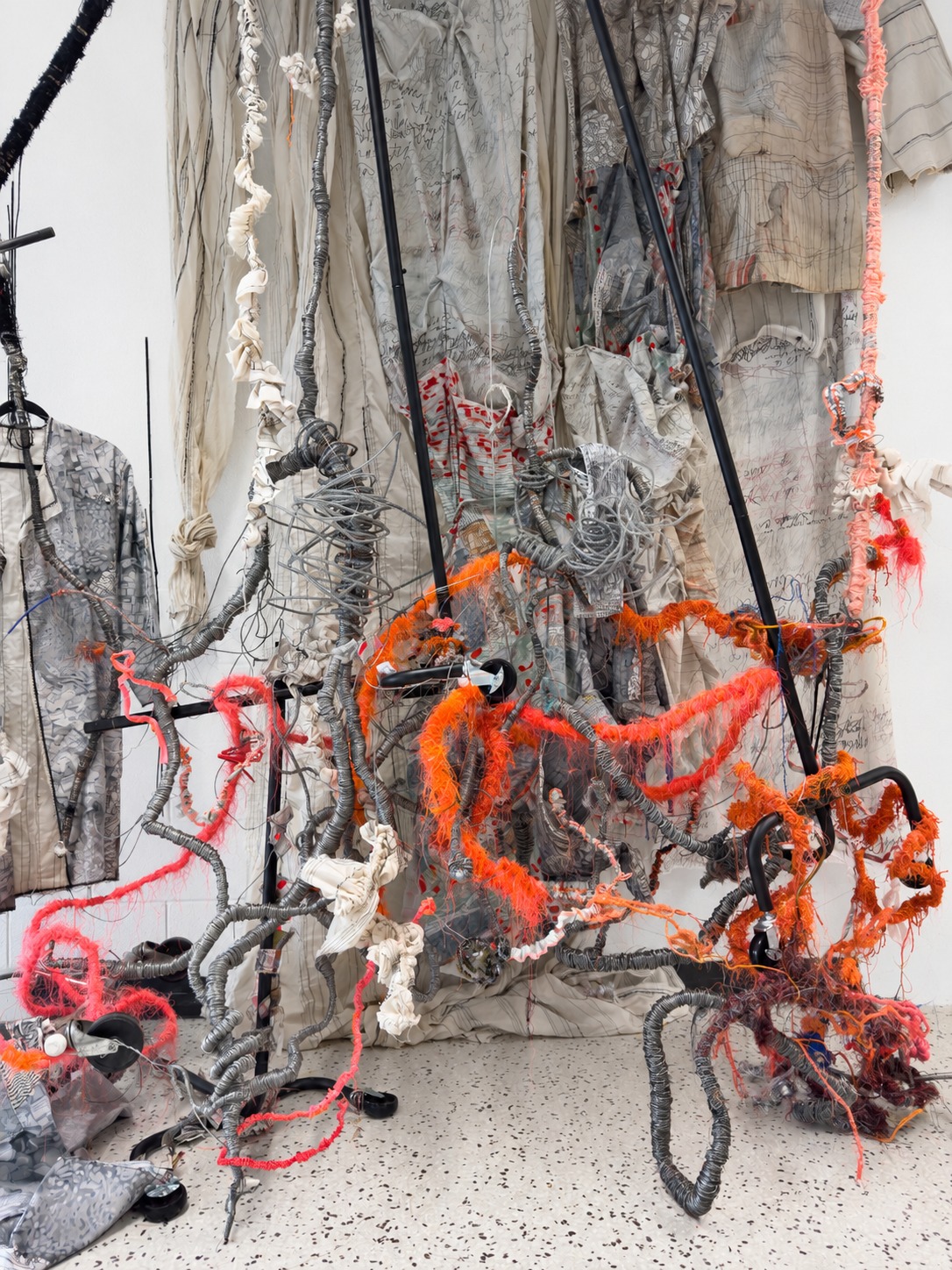
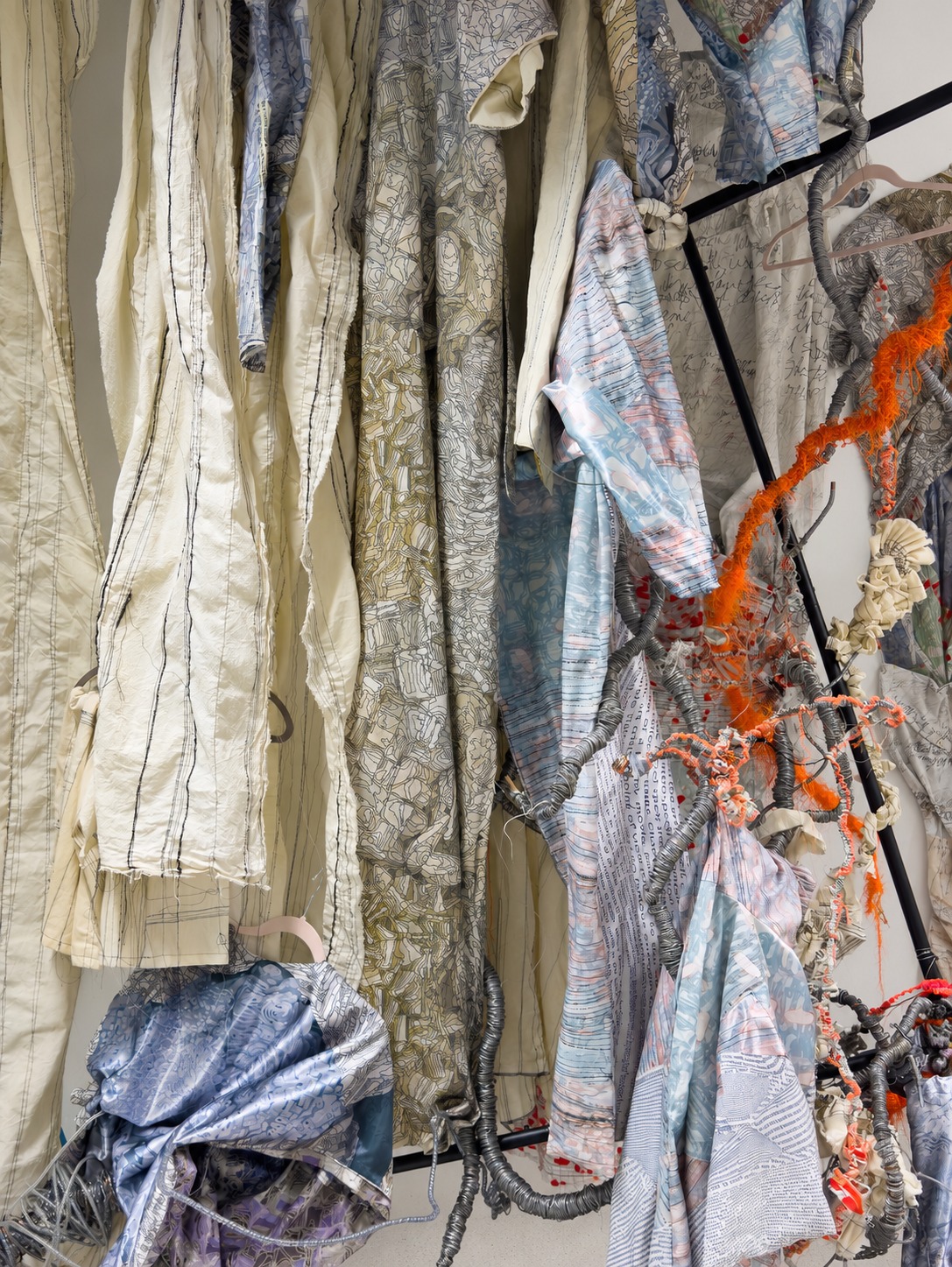
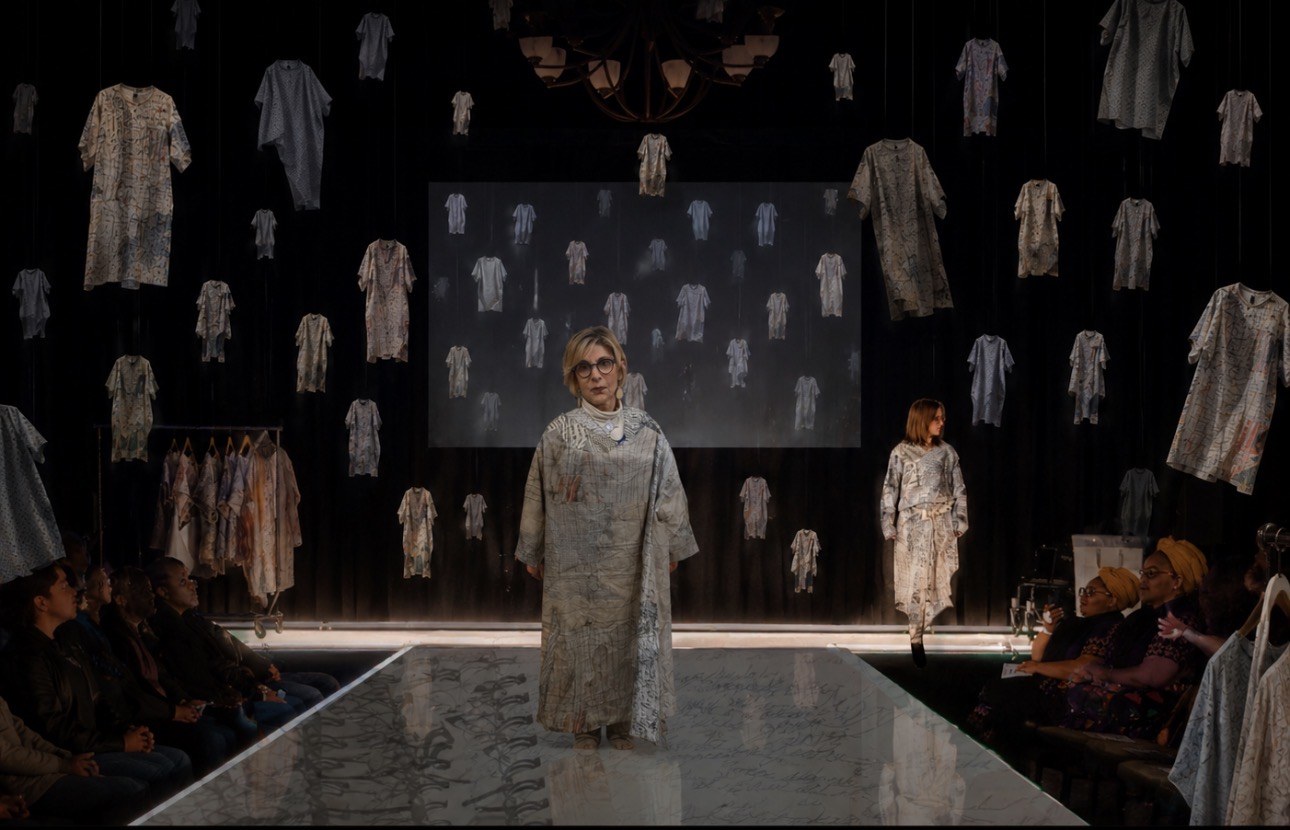
World of Threads Installation
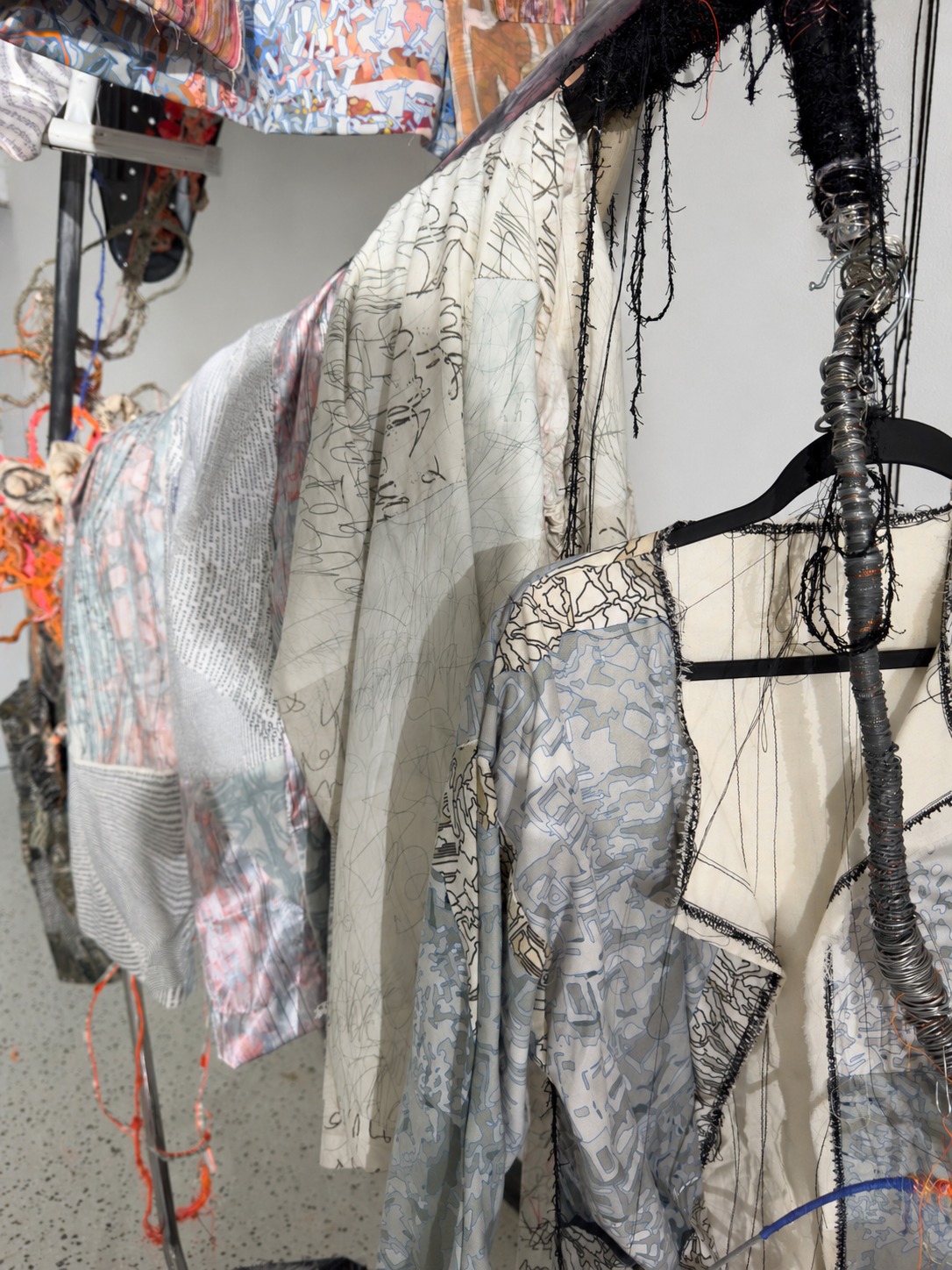
What once concealed
now reveals.
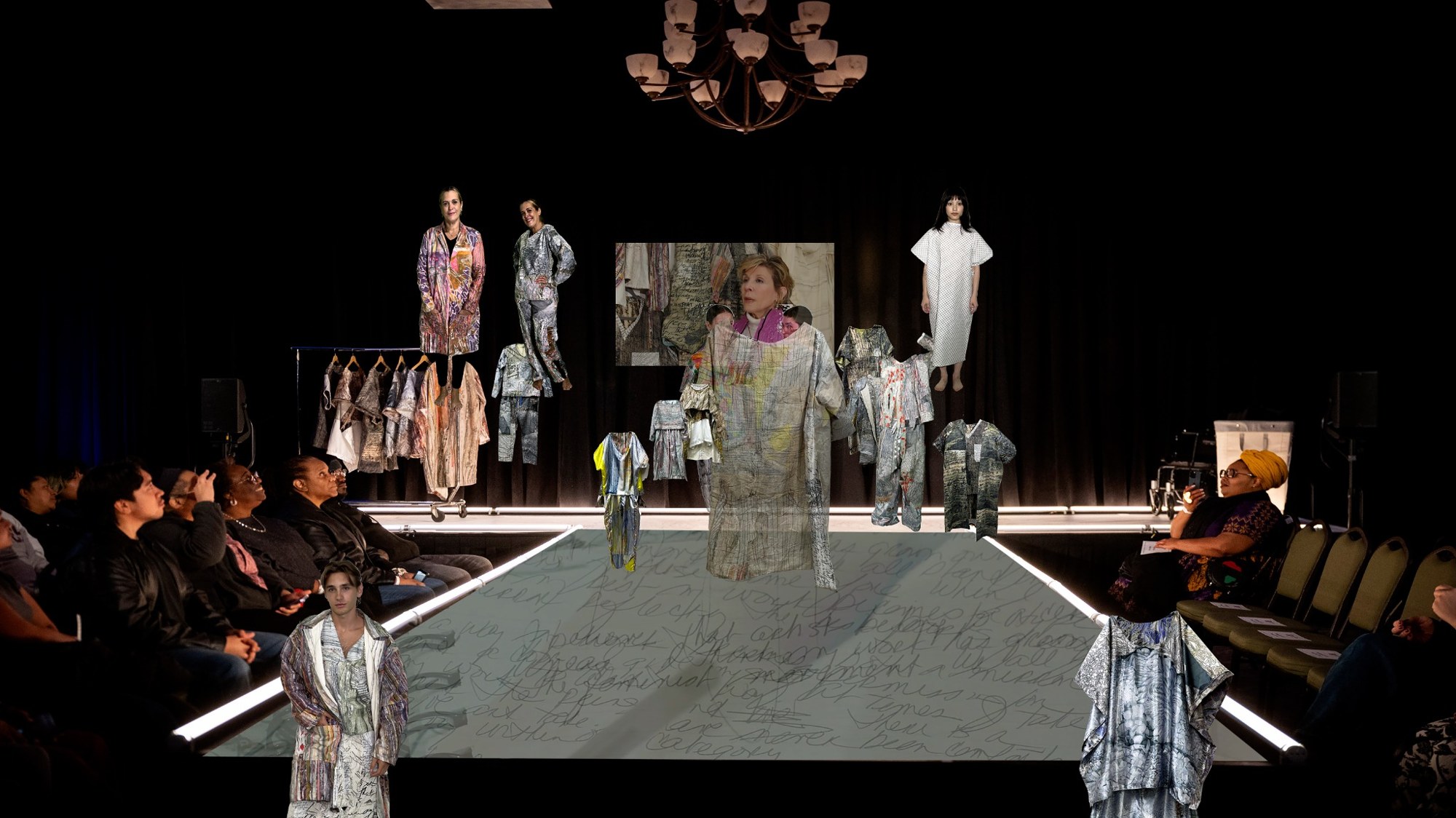
Wearing the Inside Out is an evolving art project exploring the relationship between identity, the body, and what we keep hidden. Through collaborations with healthcare participants, students, and performers, personal writing, drawings, and imagery are transformed into garments, sculptural constructions, installations, and performance.
The project moves between private experience and public expression, giving visibility and stature to what often goes unnoticed.
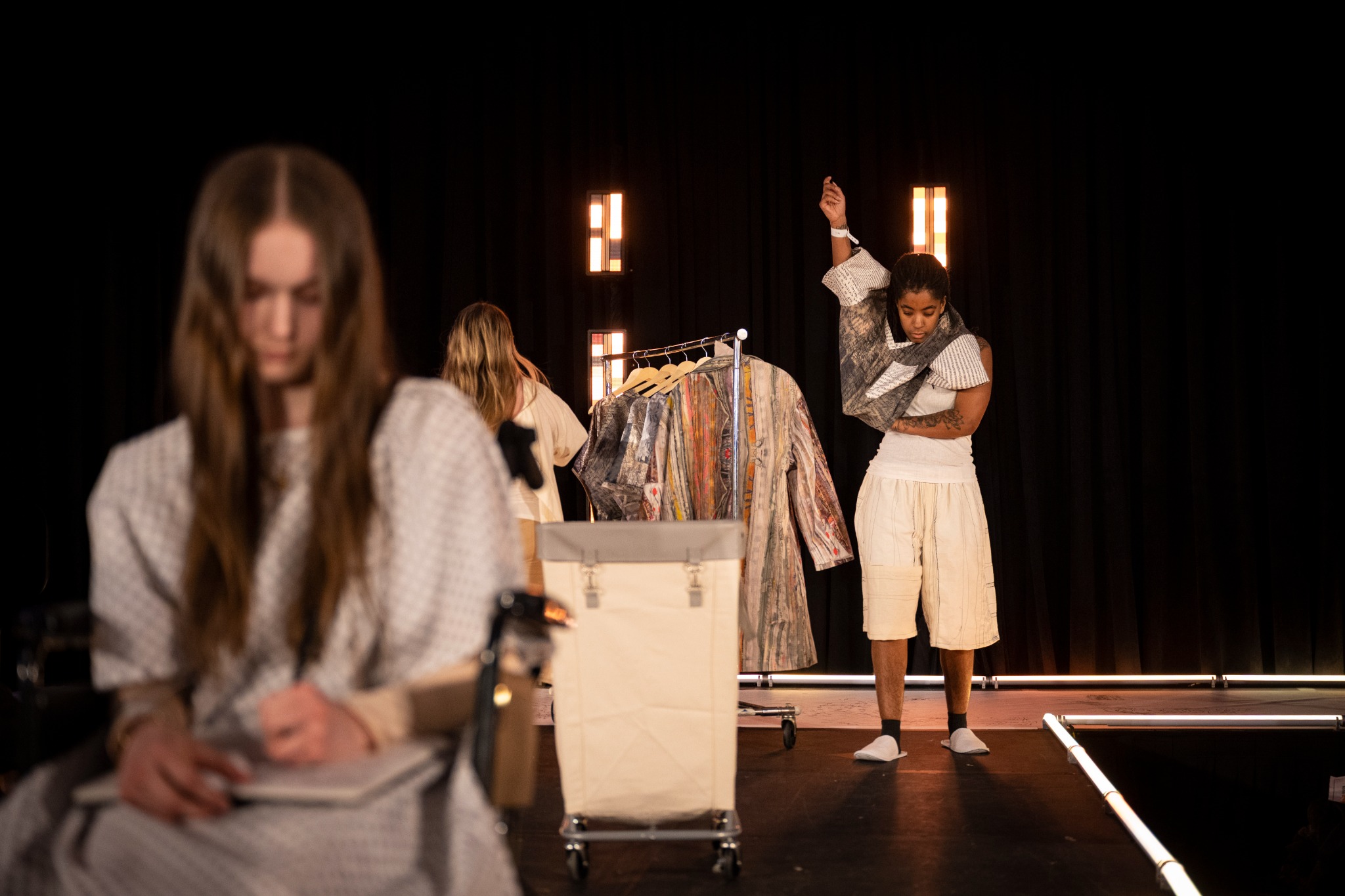
Performance
Performers become active marks within a picture plane.
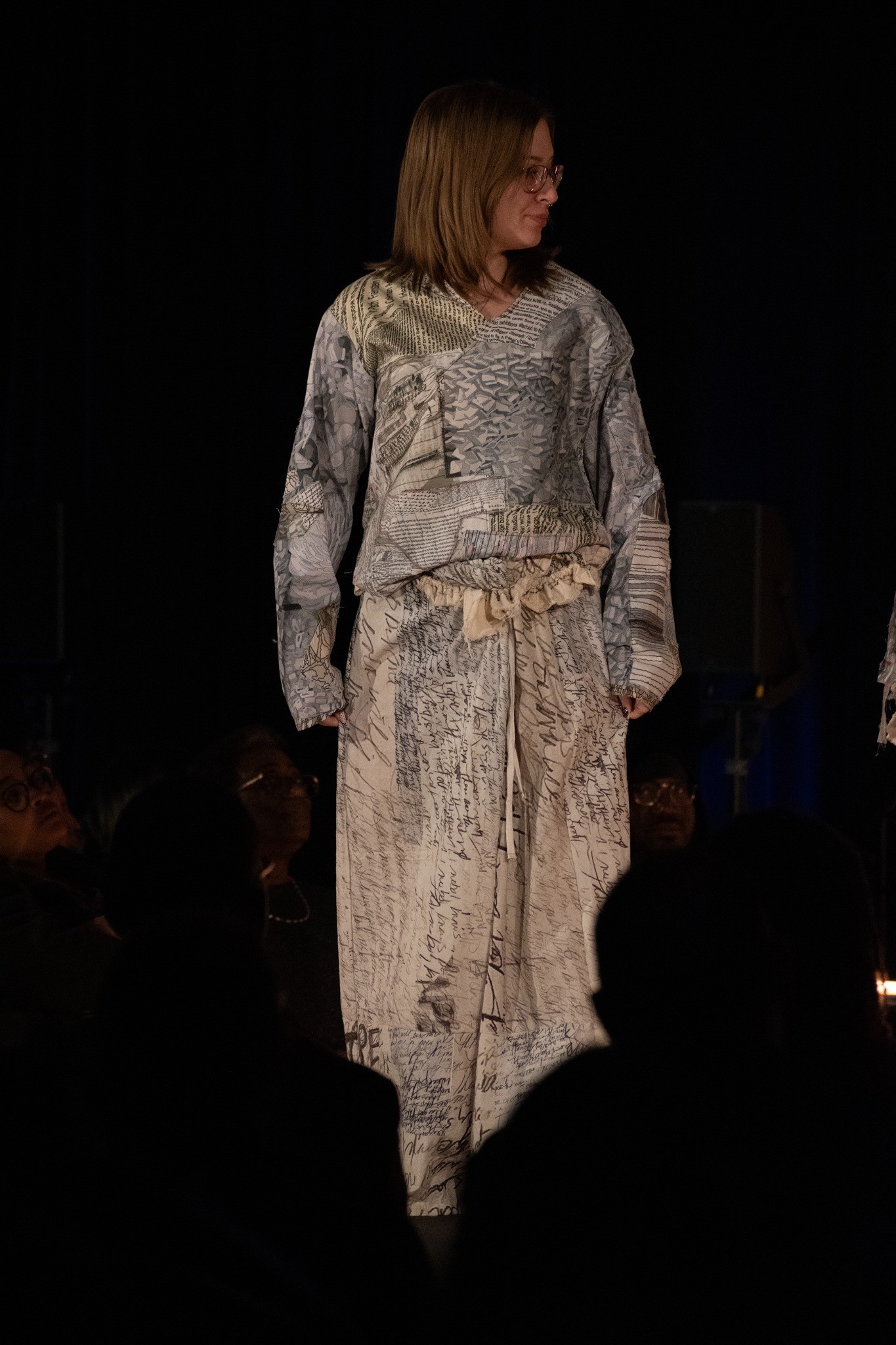
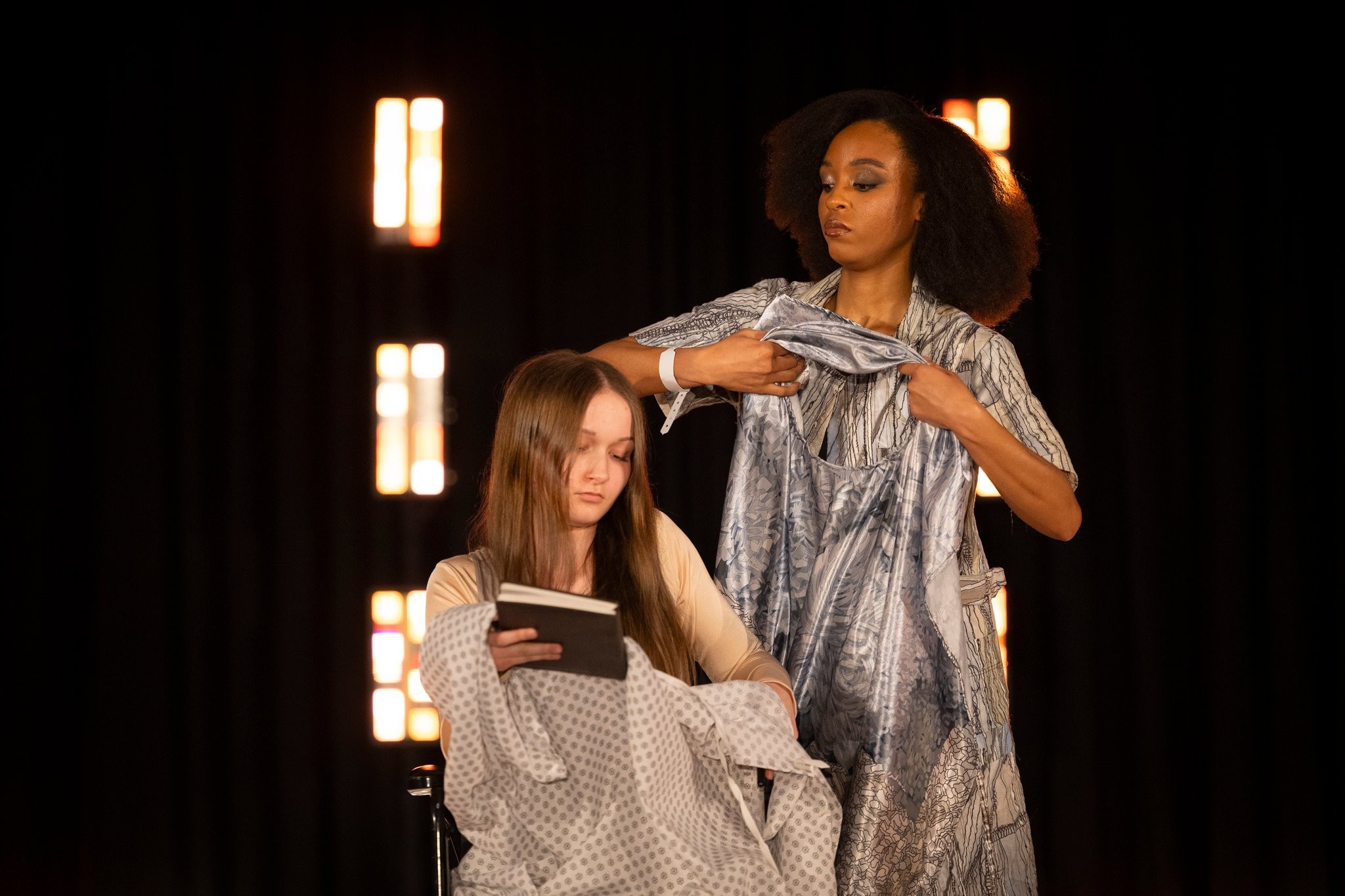
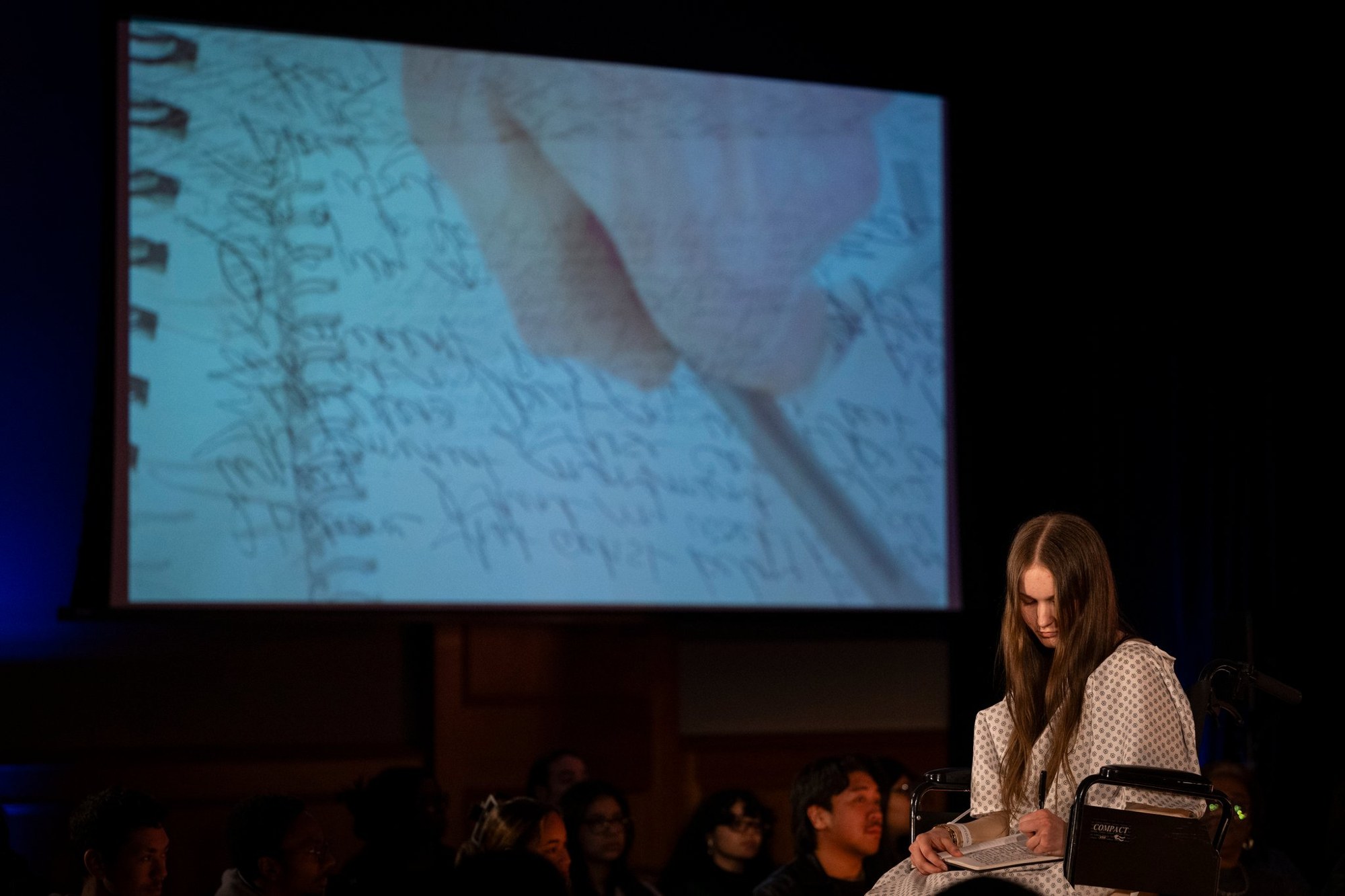 ▶ Project Video · 11 min 31 sec
Wearing the Inside Out · Open video
Video Performance Reimagined
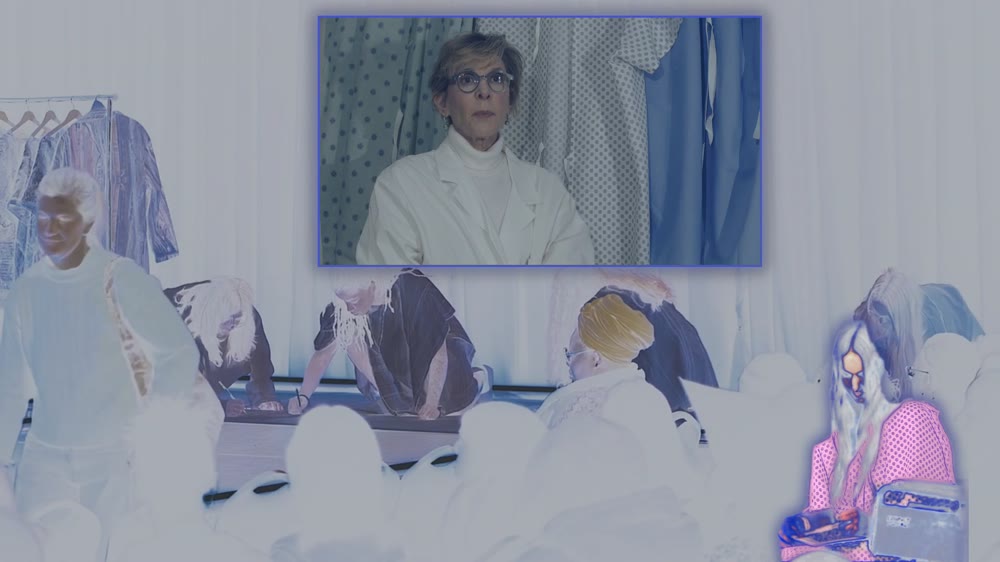 ▶ Video Performance Reimagined Clip
Wearing the Inside Out · Video snippet
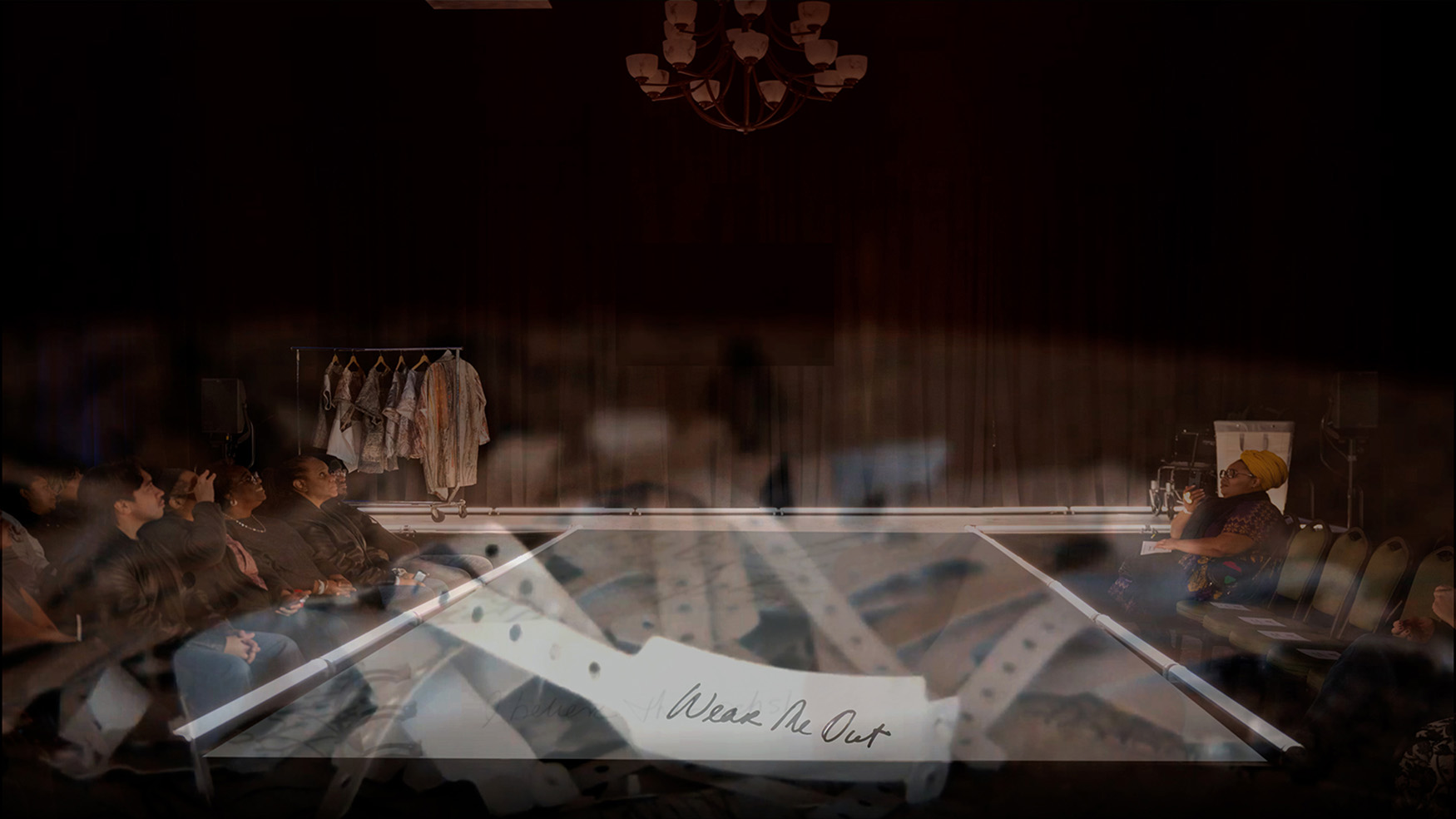
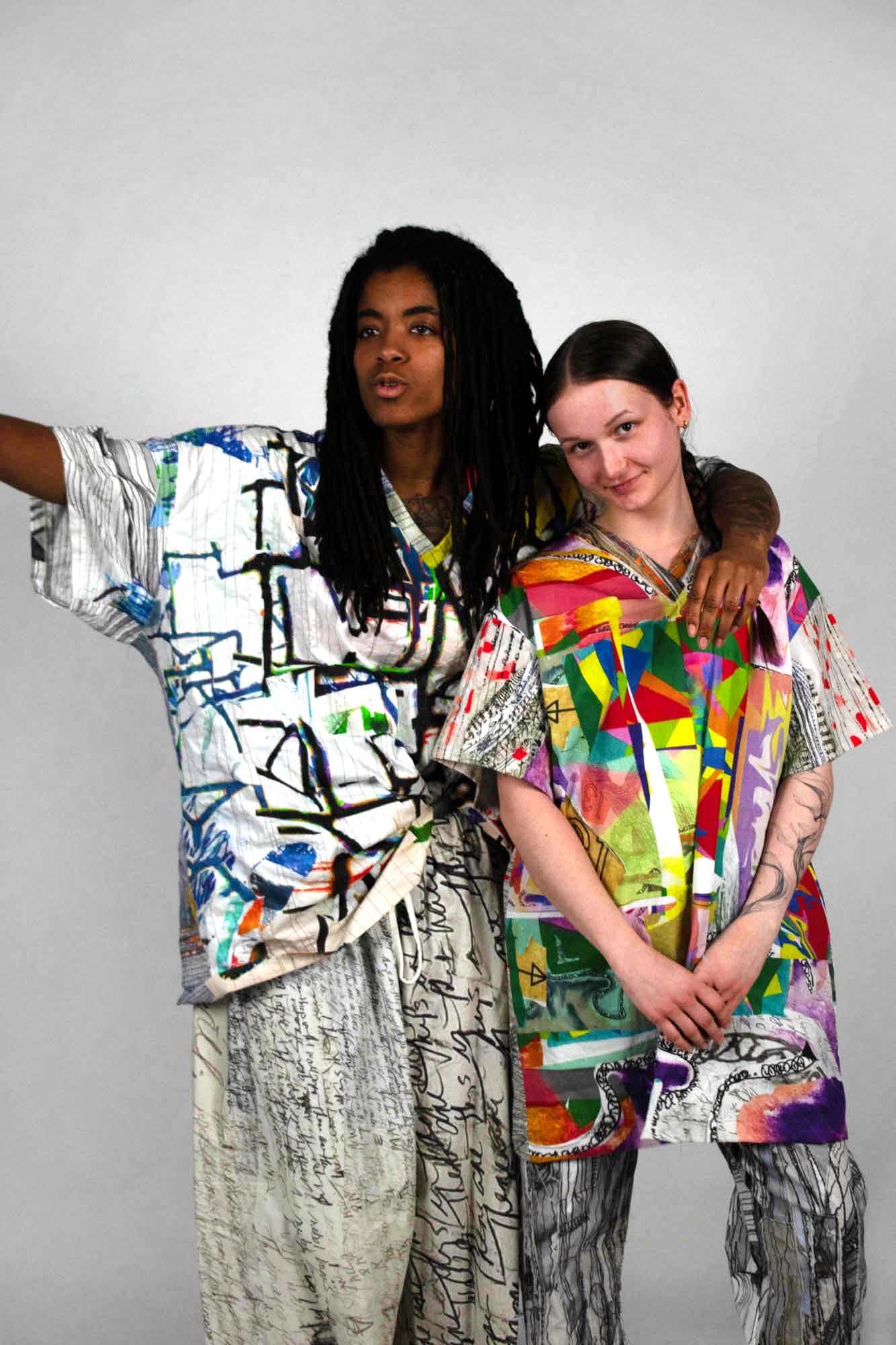
Wearables
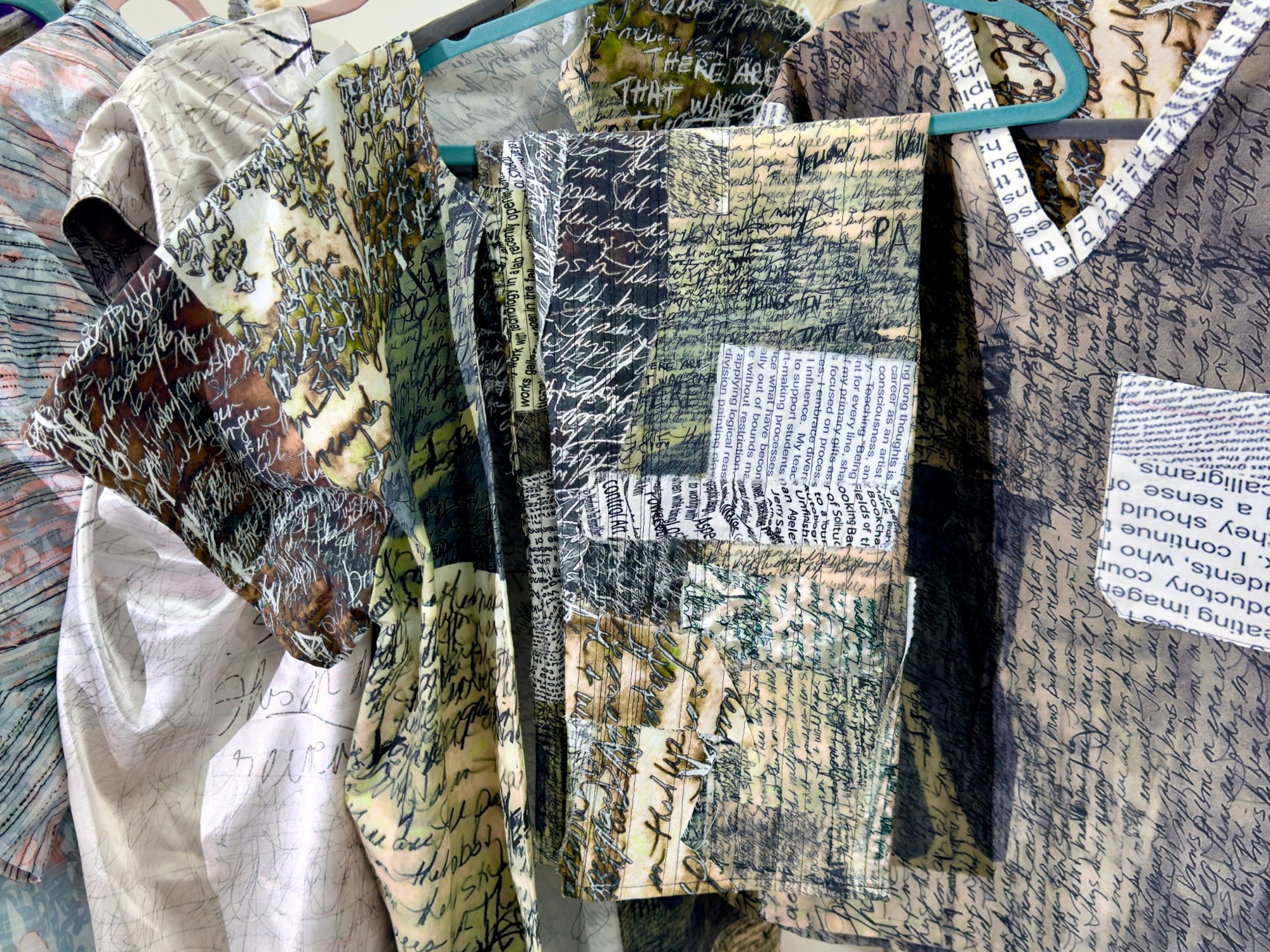 View two more images +
About the project
Materials acquire
possibilities.
I want my walls to walk.
Margery Amdur’s practice brings painting, sculpture, and textiles into installations and wearable forms. Threads misbehave. Seams wander. Repetition, attachment, and mending become ways to think about identity and the relationship between inner experience and outward appearance.
Collaborator: Sheila Linz · Rutgers–Camden
Supported by a Rutgers–Camden Chancellor’s Grant.
Collaboration
About the project
Materials acquire
possibilities.
I want my walls to walk.
Margery Amdur’s practice brings painting, sculpture, and textiles into installations and wearable forms. Threads misbehave. Seams wander. Repetition, attachment, and mending become ways to think about identity and the relationship between inner experience and outward appearance.
Collaborator: Sheila Linz · Rutgers–Camden
Supported by a Rutgers–Camden Chancellor’s Grant.